
The 2026 Guide to Vietnam Cosmetics Packaging and Labeling Standards
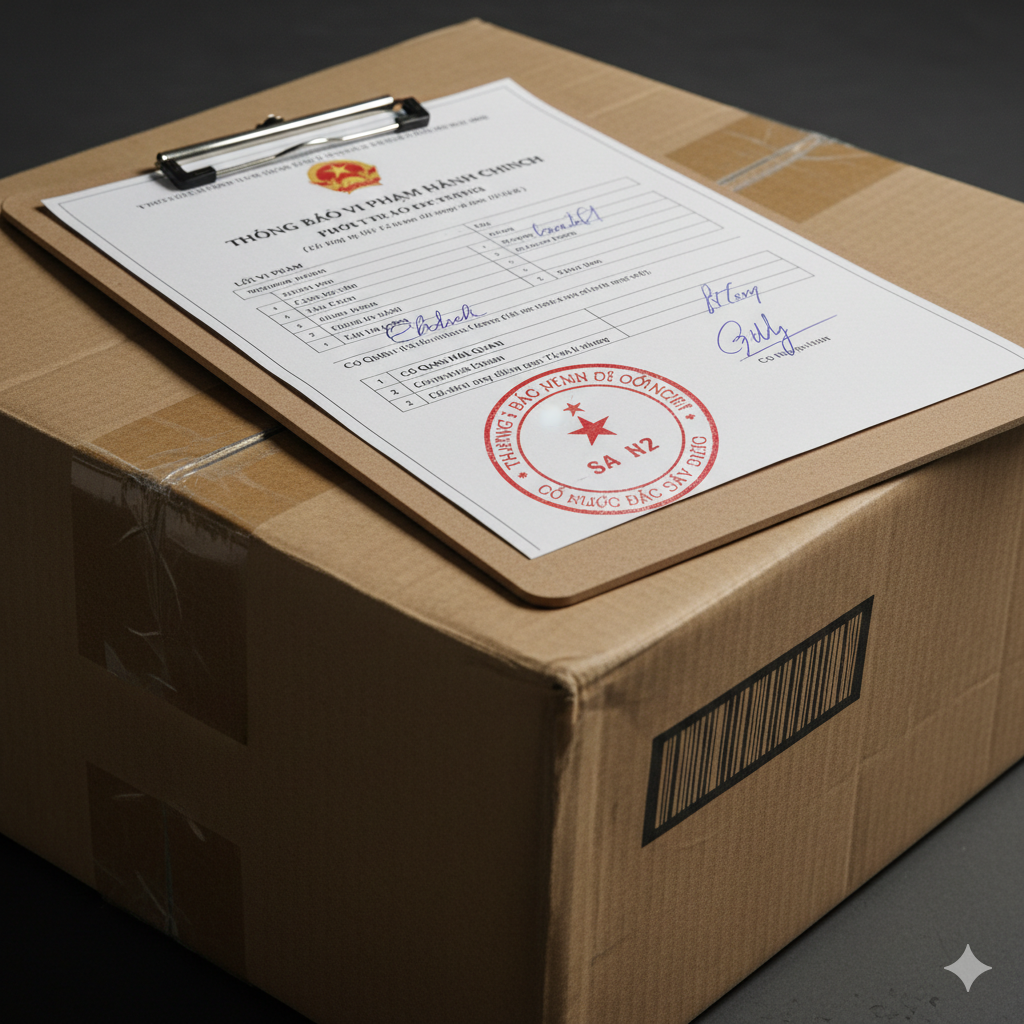
An unbearable, acrid chemical smell of cheap adhesives vaporizing under the equatorial sun. That is the first sign your supply chain has failed. At the Cat Lai Port in Ho Chi Minh City, customs inspectors routinely open shipping containers baking at 40°C (104°F). Inside, tens of thousands of imported cosmetic boxes feature "over-stickered" Vietnamese labels. Because the brand’s global procurement team decided to save $0.05 per unit by manually applying local language stickers over their European stock, the high-humidity environment has caused the sticker edges to curl. Worse, the melting adhesive has slid down the carton, obscuring the original manufacturer's Batch Number and the mandatory Cosmetic Product Notification (CPN) receipt code. The result is immediate: a "Red Channel hold," an indefinite suspension of clearance, and a daily demurrage fee that will wipe out the quarter's profit margin.
Forget theoretical compliance manuals. In the cross-border cosmetics trade, regulatory failure is almost always a physical failure first. Brands obsess over Pantone matching and influencer unboxing experiences, completely ignoring the mechanical and chemical realities of Southeast Asian logistics. When your packaging material degrades, your legally mandated labeling degrades with it. And in Vietnam, an illegible label is treated with the exact same severity as a toxic formulation.
The Illusion of ASEAN Homogeneity
A fatal procurement error is assuming that compliance in Thailand or China automatically grants you a free pass in Vietnam. While the ASEAN Cosmetic Directive (ACD) provides a foundational framework, the Drug Administration of Vietnam (VFDA) enforces Circular 06/2011/TT-BYT with aggressive local nuances.
Chinese regulations heavily prioritize heavy metal testing and animal-testing alternatives. Thai FDA focuses on local manufacturing facility audits. Vietnam, however, operates on a hyper-vigilant post-market surveillance model. Market surveillance agencies conduct random "shelf-sweeping" operations in retail stores across Hanoi and Da Nang. They are not checking your marketing brochures; they are physically holding your secondary packaging under fluorescent lights, comparing the printed INCI (International Nomenclature of Cosmetic Ingredients) list directly against the digitized CPN database.
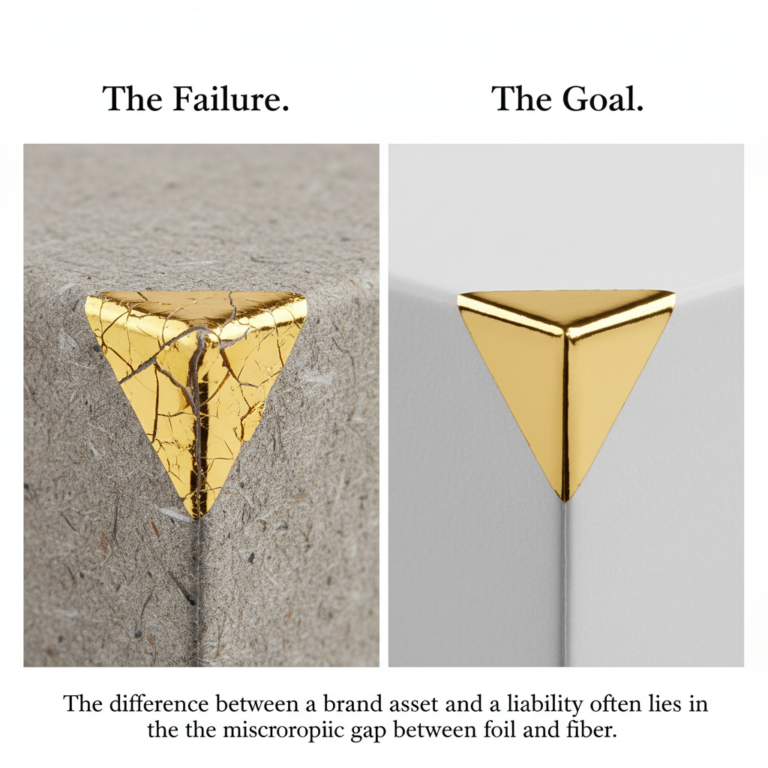
If your procurement department sourced low-grade folding cartons with porous paper structures, offset ink bleeds. Under a magnifying glass, a micro-printed INCI list bleeding into an illegible gray smudge is not classified as a "printing error." It is classified by VFDA inspectors as "deliberate obfuscation of cosmetic ingredients." The penalty is an immediate forced recall and the revocation of your notification receipt.
Structural Integrity as the First Line of Legal Defense
Regulatory compliance cannot be separated from packaging engineering. You cannot print a high-resolution, compliant label on a substrate that cannot survive the environment.
Consider the monsoon season. Handling a cheap, single-layer 250gsm folding carton that has sat in a non-climate-controlled warehouse in District 9 feels like handling a damp rag. As the paperboard absorbs moisture, it swells. Barcodes warp, QR codes linking to mandatory traceability databases become un-scannable, and expiry dates stamped via thermal transfer begin to flake off.
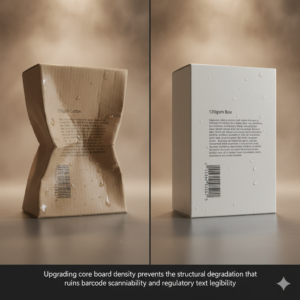
Experienced engineering consultants refuse to approve these brittle supply chain compromises. Instead of risking a 15% return rate due to structural degradation, specifying multi-layered rigid setup boxes dramatically reduces the mechanical stress on the packaging exterior during long-haul transit. The reassuring, muffled 'thud' of a precisely engineered 1200gsm greyboard closing isn't just a premium tactile experience for the consumer; it is a structural guarantee that the external surface tension remains flat. A flat, rigid surface ensures that secondary UV-cured ink layers—containing critical compliance data—adhere permanently and remain perfectly legible regardless of humidity spikes.
The Information Architecture Mandate
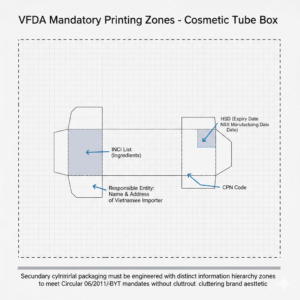
The VFDA requires specific data points to be permanently affixed to the packaging. Omitting even one triggers an automatic rejection. Your packaging designers must treat these elements not as an afterthought, but as the core architecture of the box layout.
Mandatory Primary & Secondary Requirements:
- Name and Function of the Product: Must be unambiguous.
- Usage Instructions: Clear, step-by-step guidance in Vietnamese.
- Full Ingredient List (INCI): Must follow exact international nomenclature. No colloquial names.
- Country of Origin: "Made in [Country]" must be explicit.
- Name and Address of the Responsible Entity: The Vietnamese importing company or distributor must be clearly identified.
- Net Weight/Volume: Using metric systems.
- Manufacturing Batch Number.
- Manufacturing Date and Expiry Date: Must be clearly demarcated (e.g., NSX and HSD in Vietnamese).
- Warnings and Precautions: Especially for products containing AHAs, BHAs, or specific UV filters.
The physical constraints of primary packaging often force brands into dangerous compromises. Printing this volume of text directly onto a 30ml glass serum bottle requires specialized curved-surface screen printing. When tolerances slip, the text becomes unreadable. This is why the secondary packaging carries the legal burden. For volatile formulations like active Vitamin C or concentrated retinoids, integrating the primary container within highly controlledtube packaging structures provides the expansive surface area required for bilingual compliance texts while offering a secondary physical barrier against photo-oxidation.
The Functional Claims Trap and "Eco-Washing"
A massive blind spot for cross-border legal counsels is the literal translation of marketing claims. The line between a "cosmetic" and a "pharmaceutical" in Vietnam is razor-thin and ruthlessly policed.
If your global packaging uses words like "Heals," "Treats," "Eliminates," or "Whitens" (in a biological sense rather than surface brightening), the VFDA will instantly reclassify your cosmetic as an unregistered drug. Millions of dollars in inventory have been destroyed because a packaging designer directly translated "Acne Treatment" into Vietnamese on the outer carton, instead of using compliant phrasing like "Helps clear skin". Your packaging text must reflect cosmetic reality: altering appearance, cleansing, and maintaining condition. It cannot promise physiological modification.
Simultaneously, the push for a "Circular Economy" introduces new failure points. Brands enthusiastically demand 100% recycled post-consumer waste (PCW) uncoated kraft paper to appeal to environmentally conscious demographics. The engineering reality? High-PCW uncoated paper absorbs ambient moisture exponentially faster than virgin coated boards. Dust from the recycled fibers interferes with print head adhesion, leading to missing digits in batch codes.
When updating INCI lists to reflect sudden ASEAN ingredient bans (such as the recent restrictions on certain cyclic silicones), procurement directors cannot afford print-plate delays or material inconsistencies. Partnering with manufacturing facilities that enforce standardized production workflows ensures rapid design iteration and verifies that the inks used for compliance text are free from heavy metals, completely bypassing the hazards of unverified "eco-friendly" broker promises.
The Cost of Non-Compliance vs. Engineering Upgrades
| Compliance Failure Point | Regulatory Action (VFDA/Customs) | The True Cost (Financial & Operational) | Engineering & Structural Solution |
|---|---|---|---|
| Illegible INCI Print (Due to ink bleed on cheap porous paper) | Red Channel Hold & Forced product recall from retail. | $400-$800/day port demurrage + Complete loss of distributor trust. | Mandate coated substrates with high-contrast UV printing; enforce rigorous pre-press text vectorization. |
| Peeling "Over-Stickers" (Failing in 85%+ high humidity) | Complete container rejection at port of entry. | Total inventory write-off + Return shipping costs + Regulatory blacklisting. | Direct-to-carton offset printing for all Vietnamese mandatory text. Eliminate post-production manual stickering. |
| Crushed Outer Cartons (Damaging barcodes and CPN data) | Un-scannable traceability codes leading to shelf-sweeping by market surveillance. | Immediate 100% product removal from physical retail channels. | Upgrade from 250gsm folding boards to rigid structures using a minimum 1000gsm-1200gsm core board. |
| Prohibited Medical Claims (Literal translation of "Treatment") | Reclassification as unregistered pharmaceutical. Confiscation. | Legal fines exceeding $15,000 USD + Banned from importing for 12-24 months. | Mandatory legal localization review of all secondary packaging text before mass plate-making. |
Forensic Q&A: The Brutal Truths of Vietnam Packaging Operations
Why does the standard "global sticker" strategy consistently fail in Vietnamese customs?
Because procurement teams calculate the cost of the sticker, but ignore the physics of the adhesive and the environment. Standard acrylic adhesives formulated for European or North American climates melt and lose tackiness when exposed to prolonged 35°C+ heat and 90% humidity inside non-ventilated shipping containers. When the stickers peel, they either fall off completely (leaving the product with illegal, non-localized packaging) or slide and obscure the factory-printed batch codes and expiry dates. Customs inspectors view obscured batch codes as intentional fraud, not an accident.
Where do imported functional cosmetics trap supply chains the most?
The trap lies in the friction between marketing aggressiveness and ACD restrictions. Brands formulate a heavy-duty anti-aging cream and print "Cellular Repair" on the box. In Vietnam, "Repair" implies a medical intervention on damaged tissue. The VFDA will halt the entire shipment. The supply chain trap snaps shut because the brand now has to recall the product, strip the primary packaging, redesign the secondary boxes, and reprint everything with the phrase "Improves skin appearance." This process takes a minimum of 60 days, during which the original formulation is degrading in a hot warehouse.
How long does untreated, "100% Recycled Eco-Kraft" paper actually survive in a Ho Chi Minh City distributor warehouse?
Less than three weeks before structural compromise begins. In environments without strict HVAC controls, untreated porous kraft paper absorbs ambient moisture until it reaches equilibrium with the humid air. The material loses up to 40% of its compressive strength, leading to bottom-crushing when stacked on pallets. Furthermore, the absorbed moisture creates a micro-environment ideal for fungal growth (mold) on the paper surface. Within 21 days, the packaging looks dirty, smells faintly of mildew, and the printed regulatory text begins to feather and blur.
Does splitting the compliance text between the bottle and a separate paper insert satisfy VFDA inspectors?
No. While detailed instructions can reside in a leaflet, the mandatory information (INCI, Expiry, Origin, Responsible Entity, Warnings) must be visible on the outermost packaging presented to the consumer. If a consumer has to break a seal or open a box to find out if the product contains a specific allergen or has expired, you are in direct violation of Circular 06. The external carton carries the absolute legal burden of communication.