
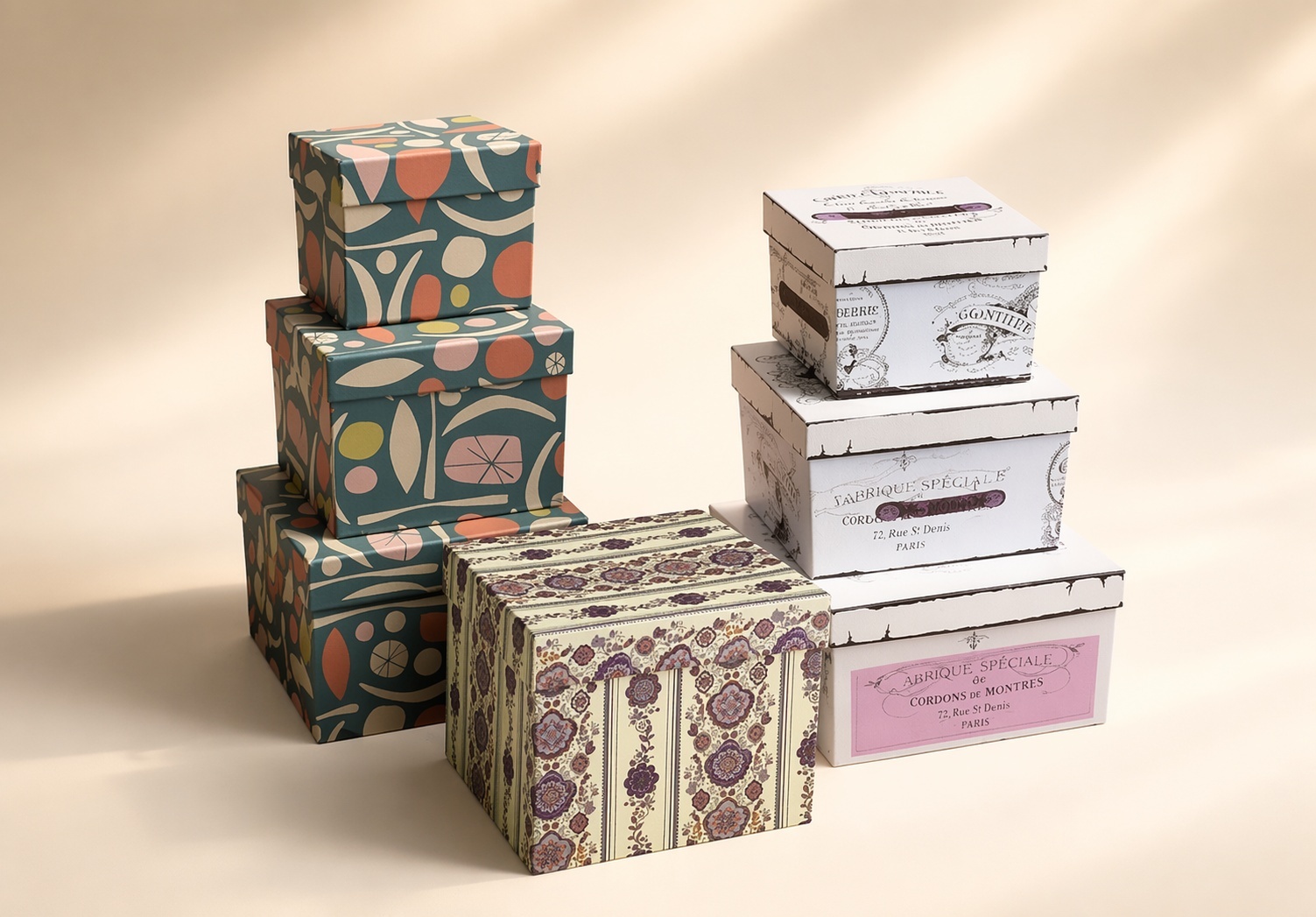
Decorative Nesting Boxes with Lids: 2026-2027 Design Trends for High-End Home Decor
In 2026-2027, high-end decorative nesting boxes with lids are transitioning from simple utility to core styling objects. Driven by "Quiet Luxury" and "Warm Minimalism," the dominant trends focus on earthy, low-saturation Morandi palettes, natural tactile finishes (such as linen and cotton-linen embossed paper), and eco-certified FSC materials. For D2C brands and boutique curators, these sensory-rich, sustainable pieces serve as essential visual statement items for modern living spaces.
The Evolution of Decorative Storage: Why Nesting Boxes are the New Silent Heroes of Interior Display
Traditionally, storage was designed to hide clutter away from sight. Consumers bought cheap, translucent plastic bins or basic wire baskets intended for the dark recesses of under-bed storage or deep closets. Today, high-end home decor is witnessing a significant paradigm shift. Decorative nesting boxes with lids have evolved into essential styling props that interior designers use to anchor a room’s visual narrative.
No longer relegated to the inside of closets, these boxes now occupy prominent positions on open shelving, console tables, and entryway credenzas. They act as functional sculptures, bringing height, structure, and curated layering to residential spaces.
From Clutter Concealment to "Functional Sculptures"
The modern luxury consumer views every square inch of their living space as an expression of personal identity. As open shelving and minimalist floating ledges continue to dominate architectural digests, the challenge of managing everyday items has intensified.
Nesting boxes solve this paradox of modern living. By combining rigid, structurally sound grayboards with exquisite outer wraps, they offer a home for keys, documents, remote controls, and chargers while presenting an immaculate, curated facade to the room.
- Dimensional Layering: A set of three nested boxes naturally provides visual
elevation, breaking the monotony of flat horizontal surfaces. - Flexible Footprint: They can be stacked high to utilize vertical space in
smaller apartments, or unnested and spread across a credenza to tie a room’s
color palette together. - Artisanal Appeal: High-end buyers treat these boxes not as disposable
storage accessories, but as collectible, low-maintenance home accents.
The Psychology of Organization in Post-Pandemic Spaces
The home has transformed into a sanctuary, a multi-functional hub where work, rest, and mindfulness coexist. In this environment, visual clutter is increasingly linked to mental fatigue and stress.
By replacing chaotic open storage with structured, aesthetically pleasing lidded boxes, consumers regain a sense of control and calm over their surroundings. The physical act of lifting a beautifully textured lid to retrieve a daily item becomes a mindful ritual, transforming a mundane task into a moment of sensory satisfaction.
For boutique owners and visual merchandisers, understanding how to position these items in-store can significantly elevate average order values. If you are looking for ways to integrate these pieces into broader design schemes, check out our curated guide on [Internal Link: Modern Living Room Styling Guide].
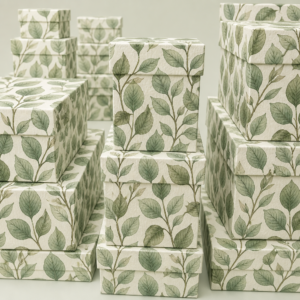
Trend 1: Warm Minimalism & The Earthy Palette Revolution
The era of sterile, clinical white and "Millennial Gray" has officially come to an end. In 2026 and 2027, luxury buyers are seeking psychological warmth, comfort, and emotional grounding in their homes. This shift has birthed "Warm Minimalism" (or Midmalism), a design language that favors soft, inviting, and organic tones over cold, high-gloss perfections.
According to leading design authorities like Homes & Gardens, warm minimalism is defining the upper tiers of home decor by swapping starkness for rich textures, subtle colors, and genuine character. This movement directly influences the color stories driving the premium decorative storage market.
2026-2027 Key Earthy Color Spectrum:
├── Warm Sand & Oatmeal (Soft, grounding neutrals that reflect light gently)
├── Terracotta, Clay & Rust (Bringing organic warmth and brick-like heritage)
├── Sage Green & Dusty Olive (Connecting indoor living to natural biophilia)
└── Low-Saturation Morandi Tones (Sophisticated, powdery pastels that blend effortlessly)
Bidding Farewell to Cold Grays
For nearly a decade, cool gray tones dominated Scandinavian and modern D2C interior aesthetics. However, global shifts toward natural wellbeing have made those cold undertones feel isolating.
In response, the 2026-2027 palette embraces pigments derived directly from the earth. These new tones are warm, inviting, and highly reflective of natural sunlight, helping to make interior spaces feel larger and more organic.
The Power of Low-Saturation Morandi Tones
Named after the legendary Italian painter Giorgio Morandi, these muted, dusty pastel shades possess a unique quality: they do not clash with existing decor. Whether a customer's home leans towards mid-century modern, Japandi, or classic transition style, Morandi-toned boxes fit in without disrupting the visual flow.
- Dusty Rose & Ochre: Provide soft, unexpected pops of color that remain
highly sophisticated. - Slate Blue & Sage: Serve as cool-toned grounding agents that harmonize with
natural wood elements. - Oatmeal & Taupe: Act as the foundational canvas, making any metallic accents
or gold-foiled branding on the boxes pop with understated elegance.
Styling with Tonal Gradations
One of the most effective ways D2C brands are presenting these boxes is through tonal gradient sets. Instead of a nesting set featuring three boxes of the exact same color, progressive design trends leverage three distinct shades of the same color family.
For instance, a set might transition from a deep terracotta base box, to a medium clay middle box, topped with a soft, warm sand small box. This gradation creates a stunning sculptural effect when stacked, encouraging consumers to purchase the entire set rather than individual pieces.
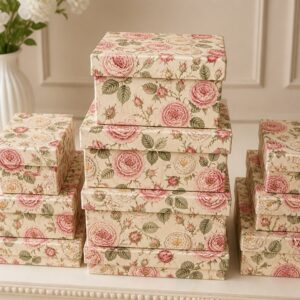
Trend 2: Sensory Surfaces – Natural Fabric Embossing & Tactile Finishes
In an increasingly digitized world where humans spend hours touching smooth glass screens, physical, tactile contact has become a luxury. Consumers are subconsciously seeking physical, tactile feedback from the physical objects they interact with inside their homes. This psychological shift has put haptic marketing and tactile design at the forefront of the luxury product development space.
For decorative nesting boxes with lids, this means moving away from generic glossy coatings, cheap plastic laminates, or plain, untextured kraft paper. Instead, the design direction is heavily leaning toward simulating high-end natural fabrics directly on sustainable paper surfaces.
The Science of Haptic Design in Retail
Studies in consumer psychology reveal that when a customer touches a product, their perceived ownership and willingness to pay increase significantly. In a high-end boutique setting, a nesting box featuring a deep, fabric-like texture immediately communicates quality and craftsmanship.
It triggers a sense of "craft-value," signaling to the buyer that the item was constructed with care and premium materials. Flat, smooth surfaces, by contrast, are often associated with mass-produced, low-cost manufacturing.
Engineering Fabric Textures on Premium Paper
Recreating the exact sensory profile of premium fabrics on paper is a marvel of modern packaging engineering. Using advanced rotary embossing machinery and custom-etched steel plates, manufacturers can apply heat and pressure to heavy-weight cover papers to create deep, precise micro-crevices.
- Raw Linen Weave: Simulates the irregular, cross-hatched threads of authentic
Belgian linen, offering a highly organic look and a rich, slightly rough
grip. - Cotton-Linen Blend: A softer, more uniform texture that feels gentle to the
touch while still providing a clear visual contrast against smooth
tabletops. - Herringbone & Bouclé Patterns: Recreating classic upholstery patterns on
paper, allowing nesting boxes to perfectly complement high-end sofas and
armchairs nearby.
Tactile Paper Engineering Process:
[Premium FSC Fiber Base] ➔ [Water-Based Pigment Dyeing] ➔ [High-Pressure Rotary Fabric Embossing] ➔ [Matte Protective Coating]
Matte Coatings and Anti-Fingerprint Technology
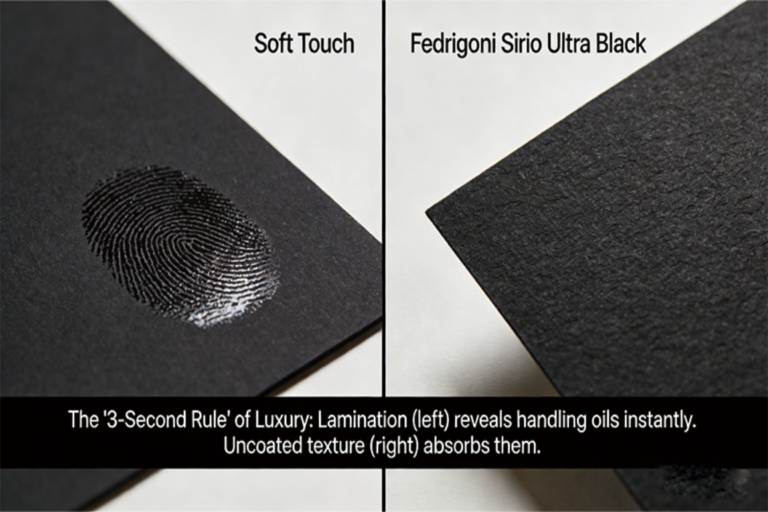
A common challenge with premium, dark-colored decorative boxes is their susceptibility to fingerprints and natural skin oils, especially in high-traffic retail displays. To solve this, 2026-2027 design trends rely on advanced, eco-friendly water-based matte coatings.
These coatings protect the paper fibers, resist staining, and diffuse light in a way that minimizes the appearance of smudges. This ensures that the boxes maintain their pristine, soft-focus appearance even after being handled by hundreds of curious shoppers in-store.
Trend 3: Eco-Luxury – The High-End Appeal of FSC-Certified Paper
Historically, there was a stark divide in consumer goods: products were either luxurious or eco-friendly, but rarely both. Sustainable products were often associated with rough, brown, unrefined textures, while luxury products relied on heavy plastic lamination, metallic foils, and non-recyclable composite= materials.
In 2026, this compromise is no longer acceptable. High-end design has embraced "Eco-Luxury," proving that premium aesthetics and strict environmental stewardship can be seamlessly unified.
A comprehensive study by Bain & Company on the luxury value chain highlights that sustainability has risen to the top of consumer priorities, forcing brands to reinvent their materials without losing their premium appeal. This is where the integration of FSC (Forest Stewardship Council) certified paper becomes a vital brand asset.
The High-End Appeal of FSC-Certified Paper
Using FSC-certified materials guarantees that the wood fibers used in the box construction originate from responsibly managed forests that provide environmental, social, and economic benefits. According to the Forest Stewardship Council (FSC), global consumer trust in the FSC mark is exceptionally high, with a majority of buyers actively seeking eco-labeled products to guide their purchasing decisions.
The Core Pillars of Sustainable Box Construction:
├── 1. Recycled/FSC Greyboard Core (1200gsm to 1800gsm for structural rigidity)
├── 2. Acid-Free, Elementally Chlorine-Free (ECF) Outer Wrap Paper
├── 3. Soy-Based or Water-Based Biodegradable Inks (No toxic chemical runoff)
└── 4. Biodegradable Adhesives (Ensuring the entire box remains compostable)
Transitioning Away from Plastic Lamination
In the past, manufacturers used thin plastic lamination (such as BOPP films) to give decorative boxes a smooth finish and protect them from moisture. However, this plastic layer makes the paper impossible to recycle in standard municipal recycling streams.
To achieve eco-luxury status, modern product developers are replacing these plastic films with high-density, dyed-through papers. These papers are colored at the pulp stage, meaning that if the box corner gets bumped, there is no white paper showing underneath—the color goes all the way through, maintaining a flawless look over years of use.
The Marketing Value of the FSC Logo
For D2C brands, displaying the FSC tree logo on the bottom of the packaging or on an included insert card acts as an immediate trust signal. It validates the brand's premium positioning and protects it from accusations of "greenwashing."
Moreover, as international regulations regarding environmental claims become more stringent, having verifiable third-party certification ensures your products can be sold seamlessly across EU, North American, and Asian markets without legal friction.
From the Showroom: Real-World Buyer Feedback on High-End Decorative Storage
Developing products based on theoretical design trends is useful, but verifying those trends through real-world commercial transactions is what drives business success. During recent international home decor and gifting exhibitions, firsthand buyer feedback confirmed a significant shift in consumer purchasing patterns.
At our trade show displays, nesting boxes finished in low-saturation Morandi colors combined with matte, fabric-embossed textures drew the highest foot traffic. High-end boutique owners and D2C curators noted that their young middle-class customers no longer view these items merely as tools to hide clutter.
"Many of our retail buyers reported that their customers are placing these nested boxes directly in the center of their living rooms or open study shelves. They are treated as primary visual anchors—almost like sculpture pieces—rather than functional storage."
Understanding the Young Middle-Class Consumer Profile
This demographic, typically aged 25 to 45, is highly design-literate. They often live in urban environments where space is at a premium, making dual-purpose items (art + utility) highly attractive.
They are willing to pay a premium for a set of three nesting boxes that instantly elevates the look of their IKEA or West Elm shelving units. To them, these boxes are an investment in their home’s aesthetic foundation, much like a quality rug or a designer lamp.
Visual Merchandising Secrets for Retail Success
To capture this market, boutique owners must rethink how they display decorative storage. Rather than stacking boxes uniformly in a corner, try these visual merchandising techniques:
- The "Half-Open" Display: Place a medium box inside a large box, with the
medium box's lid propped up slightly, revealing a clean interior. This
demonstrates functionality while showcasing the box's inner lining contrast. - The Storyteller Stack: Mix and match different textures (e.g., pair a
linen-embossed box with a smooth, matte-painted ceramic vase nearby) to show
how the box adds texture to a mixed-material display. - The Entryway Setup: Place a single small box on a console table alongside a
key tray, a candle, and a small plant, showing customers exactly how to use
the piece as a daily functional sculpture.
For a deeper look into aligning your manufacturing pipeline with these buyer demands and optimizing your wholesale product lineup, explore our comprehensive [Internal Link: D2C Home Sourcing Guide].
Sourcing and Product Development Guide for D2C Brands (2026-2027)
If you are a D2C product developer or product manager looking to bring a collection of high-end nesting boxes to market, turning these design trends into physical products requires careful technical specifications. Below is a quick reference guide to help you communicate with your manufacturing partners.
Greyboard Density and Thickness (The Core)
The structural integrity of a decorative nesting box is determined by the grayboard inside. For a box to feel premium, it must have weight and rigidity.
- Avoid: 800gsm to 1000gsm boards. These are thin, prone to warping over time,
and feel lightweight. - Target: 1200gsm to 1600gsm boards for small to medium boxes.
- Target: 1800gsm boards for large nesting boxes (above 30cm in width) to
prevent the lid or base from bowing under weight.
Wrap Paper Weight and Characteristics
The wrap paper is the visible skin of your box. Selecting the right weight ensures a clean wrap without tearing at the corners.
- Ideal Weight: 120gsm to 150gsm specialty paper. Anything thinner than 120gsm
may allow the gray adhesive underneath to bleed through or show
imperfections in the grayboard. Anything thicker than 150gsm is too rigid to
wrap cleanly around sharp corners, resulting in bulky, unrefined edges. - Lining Paper: Do not forget the interior! Use a contrasting color or a
subtle pattern in a lighter 100gsm to 120gsm paper to create a pleasant
"surprise" moment when the customer opens the lid.
People Also Ask: High-End Decorative Box Trends
Q1: What color trends dominate decorative nesting boxes in 2026-2027?
A: Low-saturation Morandi tones and warm, organic earth tones (like warm sand,
clay, and terracotta) are dominant. These colors align with "Warm Minimalism,"
replacing cold whites and grays with soothing, natural warmth.
Q2: Why is tactility so important for premium home storage products?
A: In a digital era, physical touch creates emotional connection. Natural fabric
embossing (such as linen or cotton-linen texture on paper) elevates a standard
box into a premium, sensory-rich artisanal piece.
Q3: How does FSC certification help D2C home decor brands?
A: FSC certification validates your brand’s commitment to sustainable sourcing.
It builds trust with eco-conscious high-end consumers and helps your products
comply with modern environmental regulations.
Q4: What is the ideal structural specification for a premium decorative storage box?
A: A premium box should feature a dense greyboard core of 1200gsm to 1800gsm to
ensure weight and rigidity, wrapped in a 120gsm to 150gsm specialty textured
paper with zero plastic lamination.
About the Author
Lijinxin Packaging Content Team We are a team of dedicated home decor sourcing specialists and product developers with over a decade of hands-on experience in high-end packaging and visual merchandising. By bridging the gap between raw material innovation (like FSC-certified papers and fabric-embossed finishes) and consumer aesthetics, we help global D2C brands and boutique curators design collections that stand out both on retail shelves and in modern homes.